

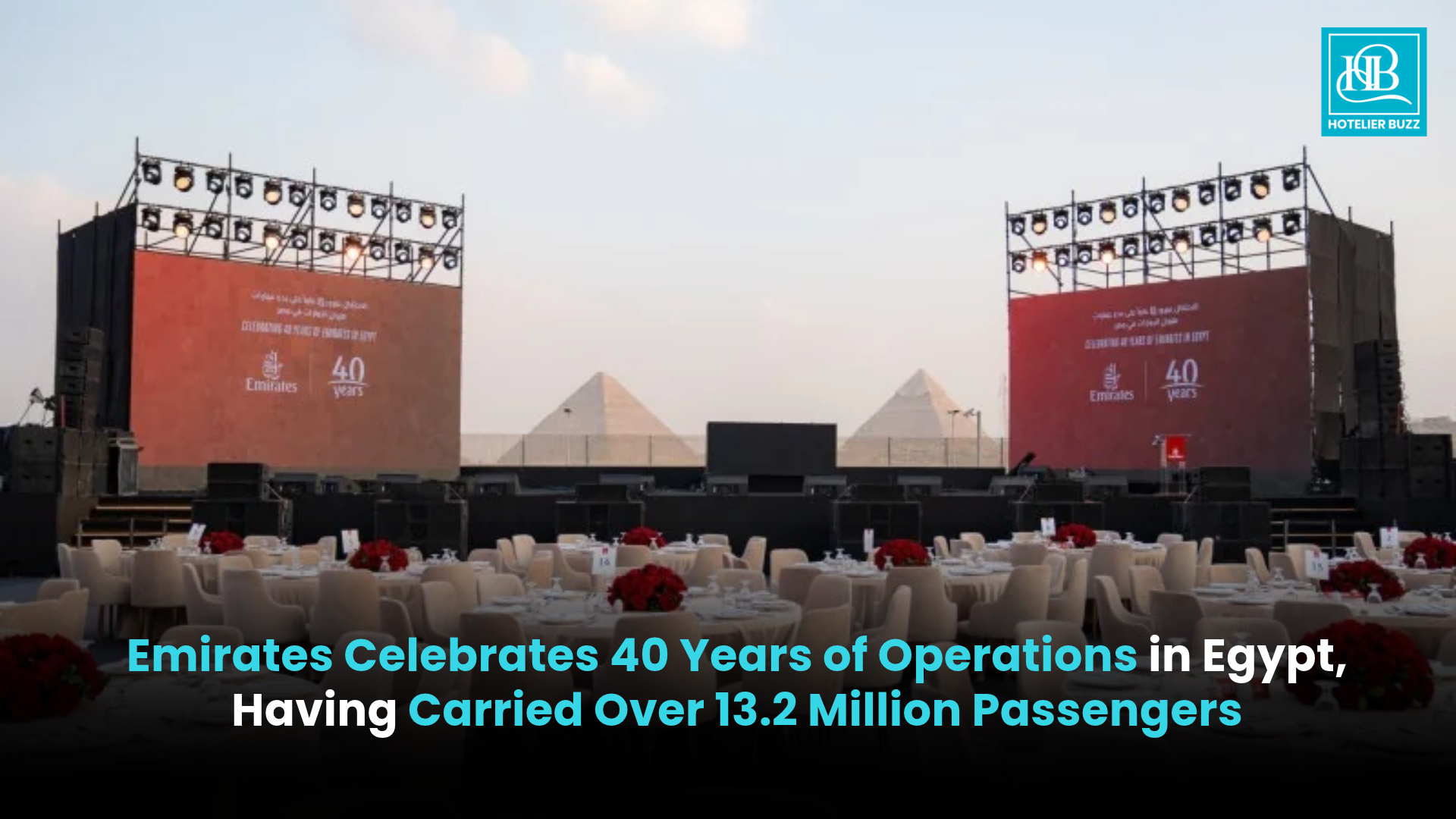
Emirates has marked 40 years of operations in Egypt with a gala dinner at the Grand Egyptian Museum in Cairo, recognising four decades of air connectivity between Egypt, the UAE and international destinations.
Since launching flights to Cairo in April 1986, the airline has transported more than 13.2 million passengers across nearly 50,000 flights between Cairo and Dubai. Emirates currently operates five daily services on the route using Airbus A380 and Boeing 777 aircraft.
Emirates Marks Four Decades with Gala at Grand Egyptian Museum
The anniversary celebration brought together senior Egyptian government officials, aviation representatives, tourism stakeholders and Emirates executives.
Attendees included Yomna El Bahar, Egypt’s Vice Minister of Tourism and Antiquities; Sameh Fawzy, President of the Egyptian Civil Aviation Authority; Magdy Ishak Azzer, Chairman and Chief Executive of Cairo Airport Company; and Abdelbaset Al Marzouqi, Deputy Head of Mission for Consular Affairs at the UAE Embassy in Egypt.
Emirates was represented by Adnan Kazim, Deputy President and Chief Commercial Officer, alongside senior commercial executives Adel Al Ghaith, Khaled Bel Jaflah and Abdulla Al Zamani.
The event featured performances by Jihad Akl, Karen Daniel and her jazz band, and Egyptian artist Ahmed Saad. Emirates also recognised its leading Egyptian travel agency partners.
From Three Weekly Flights to Five Daily Services
Emirates began operations to Cairo in April 1986, making Egypt its first destination in the Middle East and Africa region after the airline’s launch.
The service initially operated three times weekly before expanding to the current five daily flights.
Through Dubai, passengers travelling from Egypt can access nearly 140 destinations across six continents, including Kuala Lumpur, Taipei, Seoul, Osaka and Hong Kong.
Adnan Kazim, Emirates’ Deputy President and Chief Commercial Officer, said:
“Egypt holds a special place in the Emirates story. It was one of the first destinations we launched after the airline was founded, and our relationship has grown immensely over the last four decades, driven by the trust of our customers and close collaboration with our partners. We are proud of the role Emirates has played in connecting Egypt with the UAE and global markets, and in supporting inbound travel, tourism and trade. Egypt has significant economic and tourism potential, and we see promising opportunities to keep supporting travel growth, particularly with new landmark projects such as the Grand Egyptian Museum.”
Supporting Egypt’s Tourism Growth
Emirates’ connectivity contributes to Egypt’s international tourism market by providing access from destinations across Asia, Europe and other regions through its Dubai hub.
The airline’s operations align with Egypt’s national tourism strategy, which targets 30 million annual visitors by 2028.
The Grand Egyptian Museum was highlighted during the anniversary celebrations as an important development for the country’s tourism sector.
Emirates SkyCargo Handles Over 170,000 Tonnes in Five Years
Emirates SkyCargo has transported more than 170,000 tonnes of imports and exports between Cairo and international markets over the past five years.
The cargo is carried using the belly-hold capacity of Emirates’ passenger aircraft.
Egyptian exports include fresh fruits, vegetables, seafood and other perishables, particularly grapes, guavas, mangoes and strawberries.
Strawberry exports are concentrated between November and March, with shipments primarily destined for the Middle East, Europe and East Asia.
Imports into Egypt include electronics, pharmaceuticals and general cargo.
Emirates Expands Passenger Services in Cairo
Alongside its flight operations, Emirates has invested in passenger facilities and retail services in Egypt.
The Emirates Lounge at Cairo International Airport, opened in 2018, provides facilities for eligible departing passengers.
In January 2025, the airline opened an Emirates World store in Cairo, offering travel consultations, booking services and opportunities for customers to explore Emirates’ products.
These facilities complement the airline’s Airbus A380 and Boeing 777 services as it continues operations in the Egyptian market
