
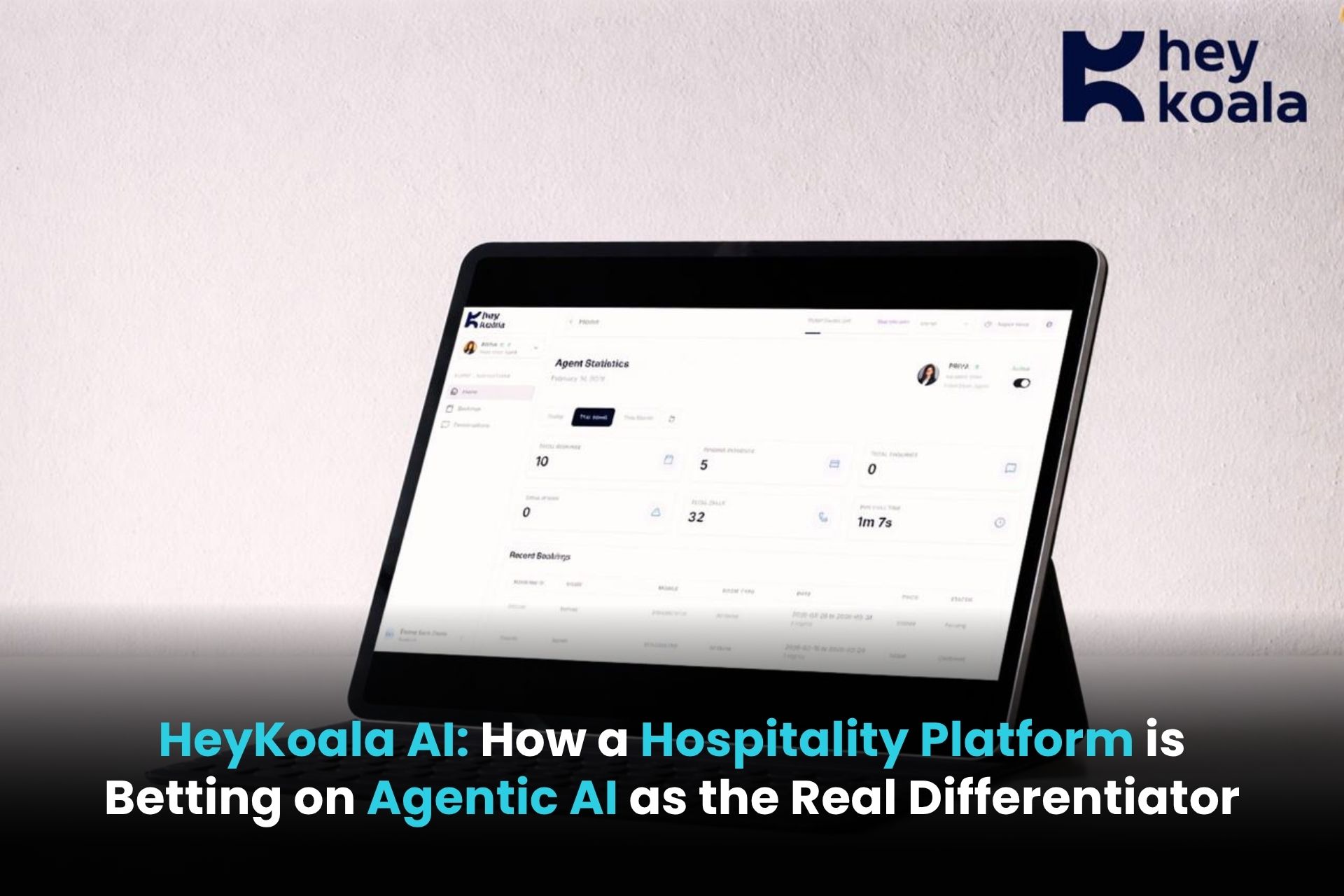
The hospitality industry is in the middle of an uncomfortable reckoning with artificial intelligence. After years of chatbot pilots that underwhelmed, automated messaging tools that felt robotic, and AI promises that rarely survived contact with actual hotel operations, the sector is cautiously reopening to the technology.
This time, the conversation is different. The question is no longer whether AI belongs in hospitality. It is which kind of AI can actually close the gap between what guests expect and what overtaxed hotel teams can realistically deliver.
That gap is real and widening. Guest expectations, shaped by the immediacy of consumer technology, have moved well ahead of the operational capacity of most properties. Front desk teams are fielding calls, managing manual system updates, and handling requests across multiple channels simultaneously.
The review economy means every missed interaction carries a measurable cost. And in a market where differentiation increasingly comes down to service consistency rather than physical product, the operational layer has become the strategic layer.
It is into this environment that HeyKoala AI has built its case.
The Agentic Bet
Founded in Mangaluru and purpose-built for hotels, resorts, and F&B businesses, HeyKoala AI is making a specific architectural wager: that the reason previous hospitality AI failed is not that the technology arrived too early, but that it stopped too short.
Legacy tools were reactive. They answered questions but could not complete tasks. They generated responses but could not update systems. They created the appearance of automation while leaving the operational burden largely intact.
HeyKoala’s answer is Agentic AI, and the distinction matters more than it might first appear.
An agentic system does not just respond to a guest inquiry. It executes the full chain of actions that inquiry requires. A reservation request becomes a confirmed booking, a PMS update, a guest confirmation, and an upsell opportunity, handled autonomously within a single conversation and without any human handoff. A complaint surfaces through sentiment analysis, gets flagged to the relevant team member, and is resolved before it reaches a public review platform. A check-out request is processed, the system is updated, and a post-stay follow-up is scheduled, all without a staff member touching a keyboard.
This is the architectural shift that HeyKoala is building around, and it represents a genuine departure from what came before.
“We saw the industry stalled by generic systems that could talk but couldn’t act. HeyKoala AI was founded to move beyond simple Q&A. Our agents understand context, build rapport, and act decisively across your entire technology stack.”
said Mohammed Azzan Patni, CEO and Co-Founder
Where the Differentiation Is Actually Built
For hotels evaluating AI platforms, the instinct is often to focus on the guest-facing features: the quality of voice interaction, the language coverage, the channel reach. These matter, but they are table stakes. The differentiation in agentic AI is built further back, in the integrations.
HeyKoala’s platform connects directly with a property’s Property Management System (PMS) and Point of Sale (POS) infrastructure. This is what makes the agentic model credible. Without deep system integration, an AI agent cannot execute, it can only inform.
The technical architecture, built by CTO and Co-Founder Atul Benoy Phillip, is designed specifically for the complexity of hospitality environments: always-on operations, multiple system dependencies, and zero tolerance for errors in live guest interactions.
The platform handles reservations, modifications, cancellations, and check-out management in real time. It processes F&B and QSR orders with POS synchronisation, manages table reservations with no-show reduction logic, and routes every interaction to the right system outcome without manual intervention.
The guest-facing layer sits on top of this foundation: voice and WhatsApp as native communication channels, multilingual capability across 26-plus languages with genuine accent and localisation tuning (not surface-level translation), and pre-arrival and post-stay automation that extends the guest relationship beyond the physical stay.
“Reservations are the heartbeat of a hotel’s operationWhen you automate that layer with intelligence and full PMS connectivity, you eliminate the errors and delays that quietly erode guest trust and you give your team back the time to focus on experience.”
said Patni said
The Staffing Equation
There is a version of the AI-in-hospitality story that positions automation as a cost-cutting instrument, a way to run leaner teams. HeyKoala is not telling that story, and for competitive reasons the distinction is important.
Properties that frame AI adoption as a headcount reduction play tend to see resistance from teams and a degradation in the human service quality that drove their reputation in the first place. The more durable framing, and the one HeyKoala has built its positioning around, is capacity reallocation.
The platform handles an estimated 70 to 80 percent of routine guest interactions autonomously. This is the high-volume, low-complexity layer of hotel communication: confirmations, queries, booking modifications, follow-ups. Removing this from the daily workload of front desk teams does not replace those teams. It redirects them toward the interactions where human judgment, warmth, and service instinct actually create value.
For a mid-scale property managing check-in peaks, late-night calls, and multilingual guests simultaneously, this reallocation is not marginal. It is operationally significant.
The Analytics Layer and the Long-Term Play
Beyond operational efficiency, HeyKoala is building toward something hotels have historically lacked: continuous, interaction-level intelligence.
Every conversation the platform handles generates data. Proactive in-stay and post-stay feedback collection, combined with real-time sentiment analysis, gives hotel leadership visibility into guest satisfaction patterns before they surface as public reviews. Real-time analytics surface revenue trends, channel performance, and guest preference data without the lag of manual reporting cycles.
For multi-property groups, this capability compounds. A single view across properties, with the granularity to analyse individual locations, channels, and guest segments, is the kind of strategic intelligence that has historically required significant investment in BI infrastructure. HeyKoala is building it into the platform’s operational layer.
This is where AI adoption in hospitality shifts from a service improvement story to a competitive strategy story. Properties that are generating and acting on this level of guest intelligence will make faster, more accurate decisions about pricing, staffing, service investment, and loyalty programming than those that are not.
Built for Hospitality. Not Adapted for It.
One of the consistent failure modes of enterprise AI adoption is the retrofitted solution: a general-purpose platform adapted for a specific industry use case, carrying all the structural compromises that adaptation implies. HeyKoala has made an explicit bet against this model.
The platform was built from the ground up for hospitality, with the operational nuances of hotel and F&B environments designed in rather than bolted on. Custom deployment, brand voice configuration, and system integrations are handled by the HeyKoala team for each property, ensuring that the platform reflects the specific guest journey of each operator rather than a generic default.
“We don’t build products, we build partnerships. Our mission is to empower businesses with solutions that are as agile and ambitious as they are. Technology should carry the transactional weight, so that the hospitality that makes this industry extraordinary can always come through.”
Said Patni
HeyKoala AI offers a 30-day free trial for hotels and F&B businesses.
