
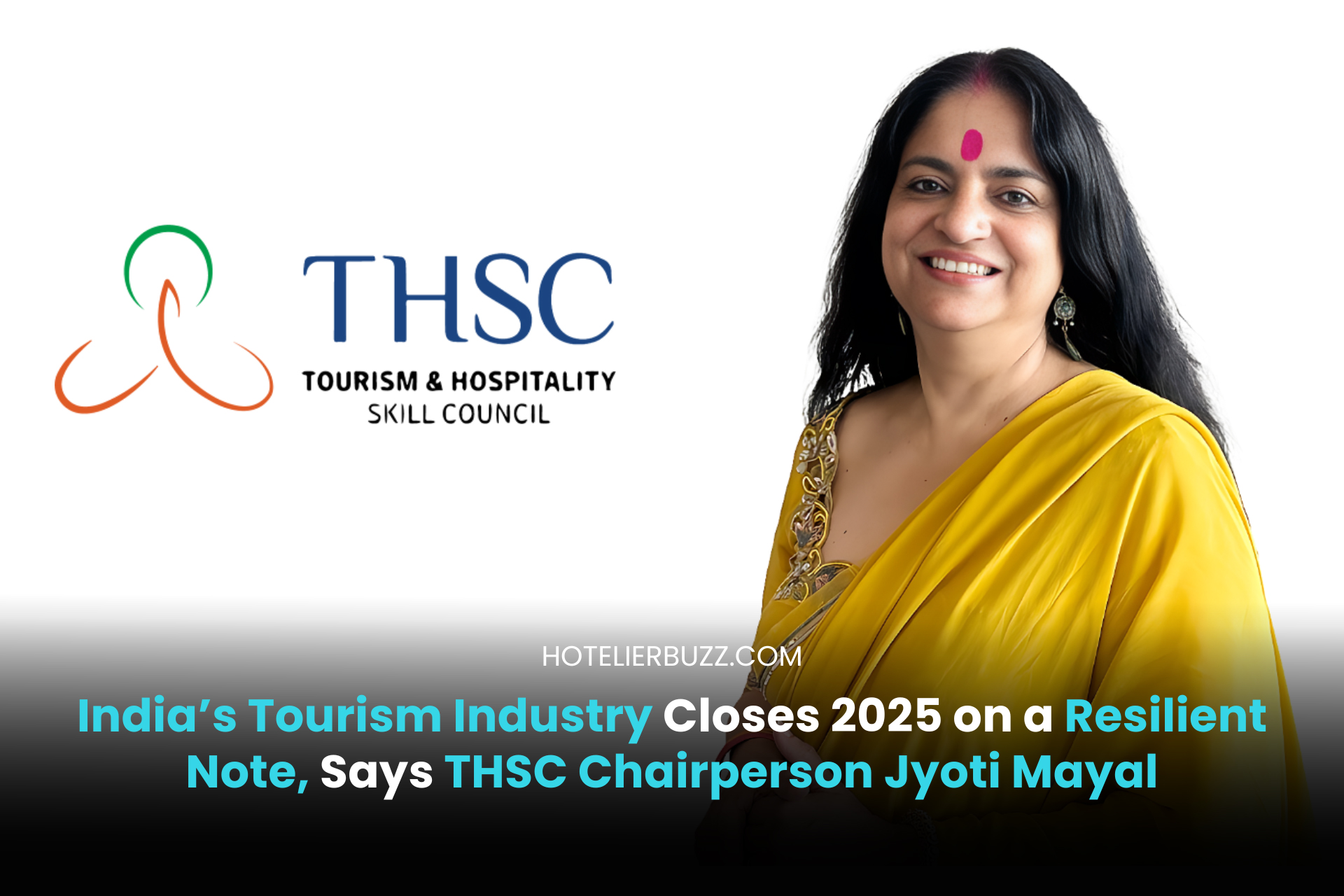
India’s tourism and hospitality sector concluded 2025 with visible resilience, steady recovery and a stronger structural foundation for future growth. According to Mrs. Jyoti Mayal, Chairperson of the Tourism & Hospitality Skill Council (THSC), the year reflected the industry’s ability to adapt, recalibrate and move forward despite intermittent global and domestic challenges. The sector, she noted, enters 2026 with renewed confidence and a sharper focus on sustainability, skills and service excellence.
Domestic travel and connectivity drive early momentum
The year opened on a positive trajectory, led by a strong surge in domestic tourism, enhanced air connectivity and the continued rise of spiritual circuits, adventure travel and micro-vacations. Several Indian states recorded double-digit growth in domestic tourist footfall, supported by festive travel demand and improved digital booking platforms. India’s G20 legacy continued to influence inbound awareness, particularly from Southeast Asia, Europe and the Middle East, strengthening the country’s global tourism narrative.
Challenges test the ecosystem
While momentum remained encouraging, 2025 also brought notable challenges. Global economic uncertainty impacted long-haul inbound travel during select periods, while fluctuations in aviation fuel prices resulted in higher airfares, influencing travel sentiment and cost structures. The sector also continued to grapple with shortages of trained manpower across tourism, hospitality and aviation-linked services, highlighting the urgency for sustained and targeted skilling interventions.
Government initiatives and skilling stabilise growth
Despite these pressures, the industry regained strength in the latter half of the year. Policy measures such as improved e-visa facilitation, infrastructure development under Swadesh Darshan 2.0 and focused skilling programmes led by THSC played a key role in stabilising the tourism ecosystem and restoring industry momentum.
Leadership perspective on 2025
Reflecting on the year, Mrs. Mayal said,
“2025 was a defining year for Indian tourism one where resilience met transformation. Our focus on building a skilled workforce, strengthening domestic circuits, and enhancing service quality has brought the sector to a much stronger and future-ready position. At the same time, better-aligned tourism and aviation policies, along with stronger public private partnership models with the government, are essential to sustain growth. Expanding skilling outreach across regional and neighbouring countries and creating dedicated skilling clusters and hubs will further strengthen the tourism ecosystem by enhancing service quality, generating employment, and narrowing skill gaps across the value chain. The momentum we have gained this year will significantly shape India’s global tourism footprint in 2026.”
Outlook for 2026 and beyond
Looking ahead, THSC expects 2026 to be shaped by three key drivers: the continued dominance of domestic travel, accelerated investment in hospitality infrastructure across emerging destinations, and a growing demand for specialised skills in sustainable tourism, digital hospitality, culinary innovation and experiential travel services. With evolving traveller expectations and increasing global attention on India as a culturally rich and value-driven destination, the sector is positioned for sustained expansion.
Mrs. Mayal added,
“To fully leverage the opportunities ahead, we must bridge skill gaps, adopt technology with agility, and strengthen collaboration between industry and training institutions. 2026 will be a year of consolidation and a year of possibilities.”
About Jyoti Mayal
Jyoti Mayal, Chairperson of the Tourism & Hospitality Skill Council and former President of TAAI, has played a pivotal role in shaping India’s modern tourism landscape through policy advocacy, industry engagement and workforce empowerment. Her leadership has contributed to strengthening India’s global tourism standing while enabling travel professionals to adapt and thrive in an increasingly competitive environment.
