
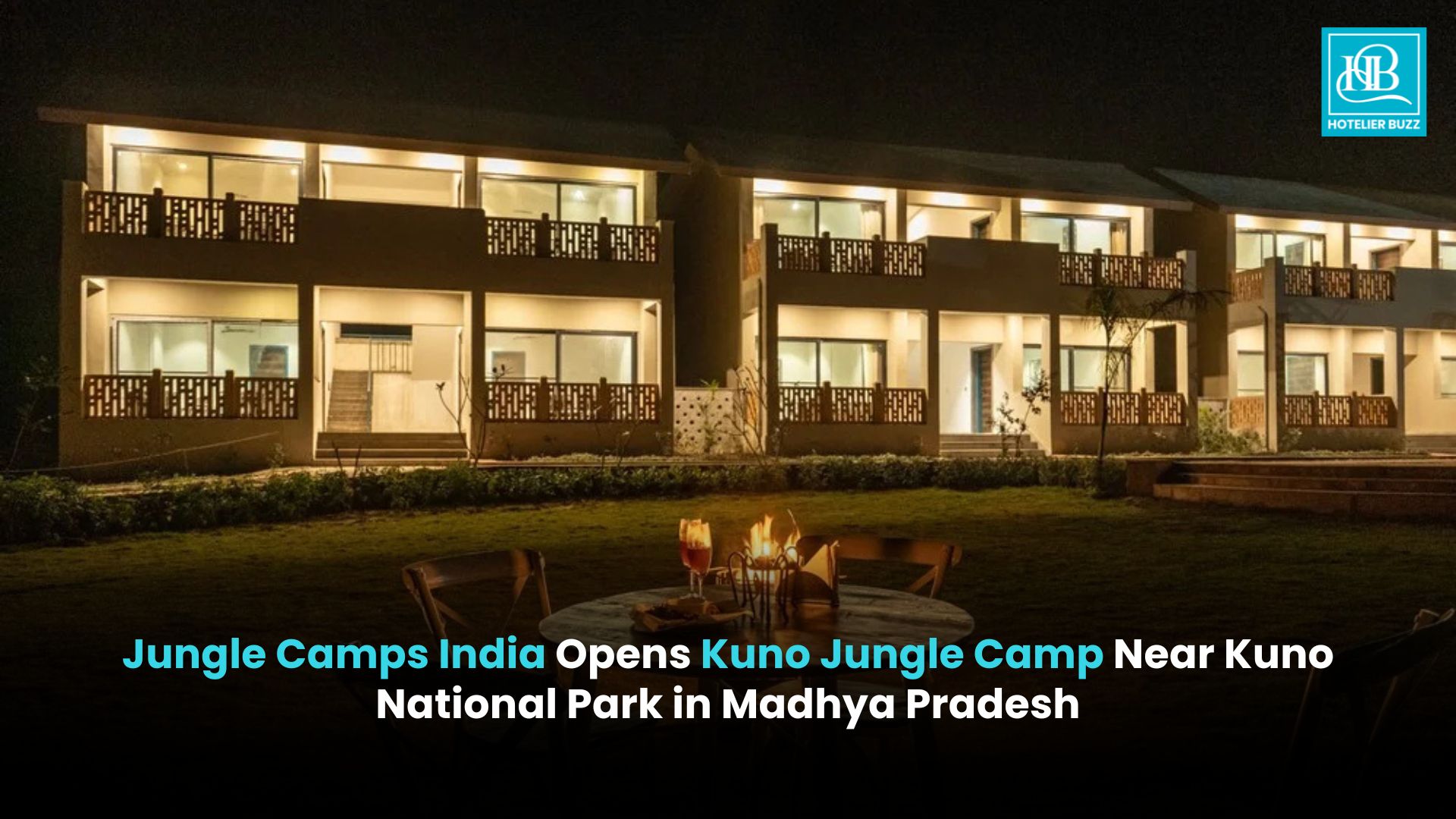
Jungle Camps India Limited has expanded its wildlife hospitality portfolio with the addition of Kuno Jungle Camp in Sheopur district, Madhya Pradesh, bringing its operational network to six wildlife lodges. Formerly known as The Palpur Fort, the property is located near Kuno National Park, a destination that has gained prominence following the reintroduction of cheetahs to India.
The newly added camp offers Premium Rooms with Balconies and Executive Rooms, catering to wildlife enthusiasts and travellers visiting the Kuno region. The property will focus on naturalist-led experiences, wildlife education and engagement with local communities, alongside accommodation for visitors exploring the national park.
Kuno Jungle Camp Becomes Sixth Wildlife Lodge in Portfolio
The addition of Kuno Jungle Camp expands Jungle Camps India Limited’s presence in India’s wildlife tourism sector.
Previously operating as The Palpur Fort, the property has joined the company’s hospitality portfolio under the Kuno Jungle Camp identity.
The accommodation includes Premium Rooms with Balconies and Executive Rooms, providing options for travellers planning wildlife-focused holidays in the region.
Its location near Kuno National Park positions the camp to serve visitors interested in the park’s wildlife, conservation initiatives and surrounding natural landscape.
Kuno National Park Gains Attention Following Cheetah Reintroduction
Kuno National Park attracted national and international attention in September 2022 when the first group of cheetahs brought from Namibia was released into the protected area under Project Cheetah.
The park, named after the Kuno River, has since become associated with India’s cheetah reintroduction programme.
This conservation initiative has contributed to interest in the region among wildlife enthusiasts, photographers and travellers seeking nature-based experiences.
The development of accommodation near the park provides additional options for visitors travelling to Kuno and its surrounding areas.
Jungle Camps India Focuses on Wildlife Education and Community Participation
Gajendra Singh Rathore, Founder, Chairperson and Managing Director of Jungle Camps India Limited, highlighted the importance of connecting tourism with wildlife awareness and local participation.
“People often plan a trip to Kuno because they have followed the return of the cheetah to India. That interest gives us a chance to speak with visitors and explain how the park is managed, why habitats matter and what residents know from living alongside wildlife.
“We want to give guests time to ask questions and listen to people who know the area well. For us, working here also means finding opportunities for nearby communities to take part in tourism on their own terms, whether through employment, supplying the lodge or sharing skills they want to pass on to others.”
The company’s approach includes creating opportunities for local residents to participate in tourism activities through employment, supplies and the sharing of traditional knowledge and skills.
Prabhir Patil to Lead Camp Operations and Naturalist Programme
Prabhir Patil will oversee operations at Kuno Jungle Camp, including the property’s naturalist programme.
The programme will introduce guests to the region’s wildlife, habitats and conservation context through guided interpretation and interaction with individuals familiar with the local environment.
Guest experiences will also include cultural performances by tribal artists and bonfire evenings, subject to availability.
These activities are intended to connect visitors with the region’s natural and cultural surroundings while supporting participation from local communities.
Location Offers Access to Kuno Safari Gates
Kuno Jungle Camp is located approximately 15 minutes by car from Tiktoli Safari Gate, providing access to one of the entry points serving Kuno National Park.
Aehra Gate is approximately 35 kilometres from the property, with the supplied travel estimate indicating a drive of around 25 minutes.
For visitors arriving by air, Gwalior Airport is approximately 200 kilometres away, with an estimated road journey of three hours.
Sawai Madhopur is located around 120 kilometres from the camp, offering an additional travel connection for visitors planning itineraries covering both Kuno and Ranthambore.
The addition of Kuno Jungle Camp strengthens Jungle Camps India Limited’s wildlife accommodation network while introducing another lodging option near one of India’s prominent conservation destinations.
