
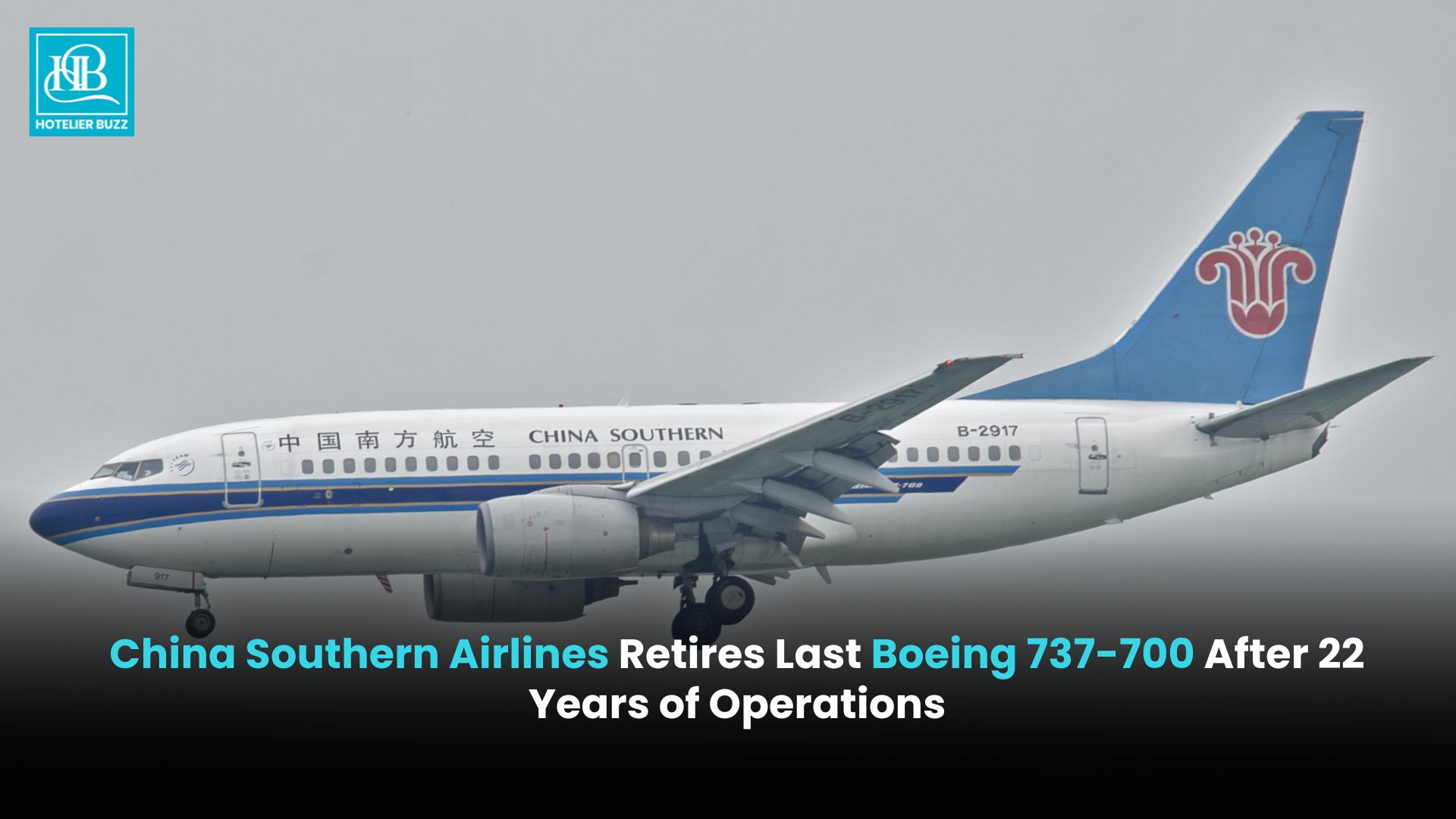
China Southern Airlines has officially ended its Boeing 737-700 operations, retiring its last remaining aircraft, registered B-5285, in August 2026. The move marks the end of a 22-year relationship with the aircraft type, which the airline operated between 2004 and 2026.
During this period, China Southern operated a total of 37 Boeing 737-700 aircraft, primarily through its regional subsidiaries in Xinjiang, Henan, Hubei and Guangxi. The aircraft typically featured around 128 seats in a two-class configuration.
The retirement represents more than a routine fleet milestone. It reflects China Southern’s broader strategy to reduce reliance on higher-cost aircraft and optimise its overall fleet composition. The 737-700, with its shorter fuselage and lower seat capacity, had a higher cost per seat compared with the airline’s Boeing 737-800s, many of which are configured with 180 all-economy seats. The type also lagged behind the newer Boeing 737 MAX in fuel efficiency.
For airlines, operating a smaller aircraft does not necessarily translate into proportionately lower operating expenses. Costs associated with fuel, crew, landing fees, maintenance, spare parts and parking remain largely fixed. As seat capacity decreases, the cost per available seat kilometre (CASK) can rise, making aircraft with weaker unit economics less attractive.
Fleet Simplification Takes Centre Stage
China Southern’s recent fleet decisions have increasingly favoured a streamlined and more efficient narrowbody fleet. The airline has been consolidating around the Boeing 737-800 and 737 MAX families while expanding its Airbus A320neo and A321neo orders. The retirement of the 737-700 is another step in this fleet evolution.
The move also aligns with a broader trend among Chinese carriers to modernise their fleets and reduce unit costs. Intense competition and fluctuating demand in the country’s aviation market have made cost discipline a priority for airlines.
China Southern’s regional subsidiaries, which previously operated the 737-700, will now rely on larger narrowbody aircraft. This could influence route planning and flight frequency decisions, although the airline has not indicated any immediate network changes resulting from the retirement.
Retirement Comes Amid Shifts in Asia-Pacific Aviation
The phase-out comes amid wider changes in the Asia-Pacific aviation market. China-Japan air capacity has plunged 40% as diplomatic tensions persist, highlighting the demand volatility airlines must navigate.
Meanwhile, China Southern continues to explore international partnerships, including developments such as the planned joint venture between Vietnam Airlines and ANA, which could influence competition across the region.
For travel professionals, the retirement signals a change in China Southern’s operational profile. Travel agents and corporate buyers may see greater consistency in cabin configurations and potentially improved onboard products as the airline standardises its narrowbody fleet.
Boeing 737 MAX and Airbus A320neo Families to Support Fleet Renewal
China Southern has not announced any immediate replacement orders specifically linked to the 737-700 retirement. However, its existing backlog of Boeing 737 MAX and Airbus A320neo aircraft is expected to help fill the capacity gap.
As the airline continues to refine its fleet, the focus remains on improving efficiency and profitability in an increasingly competitive aviation market.
