
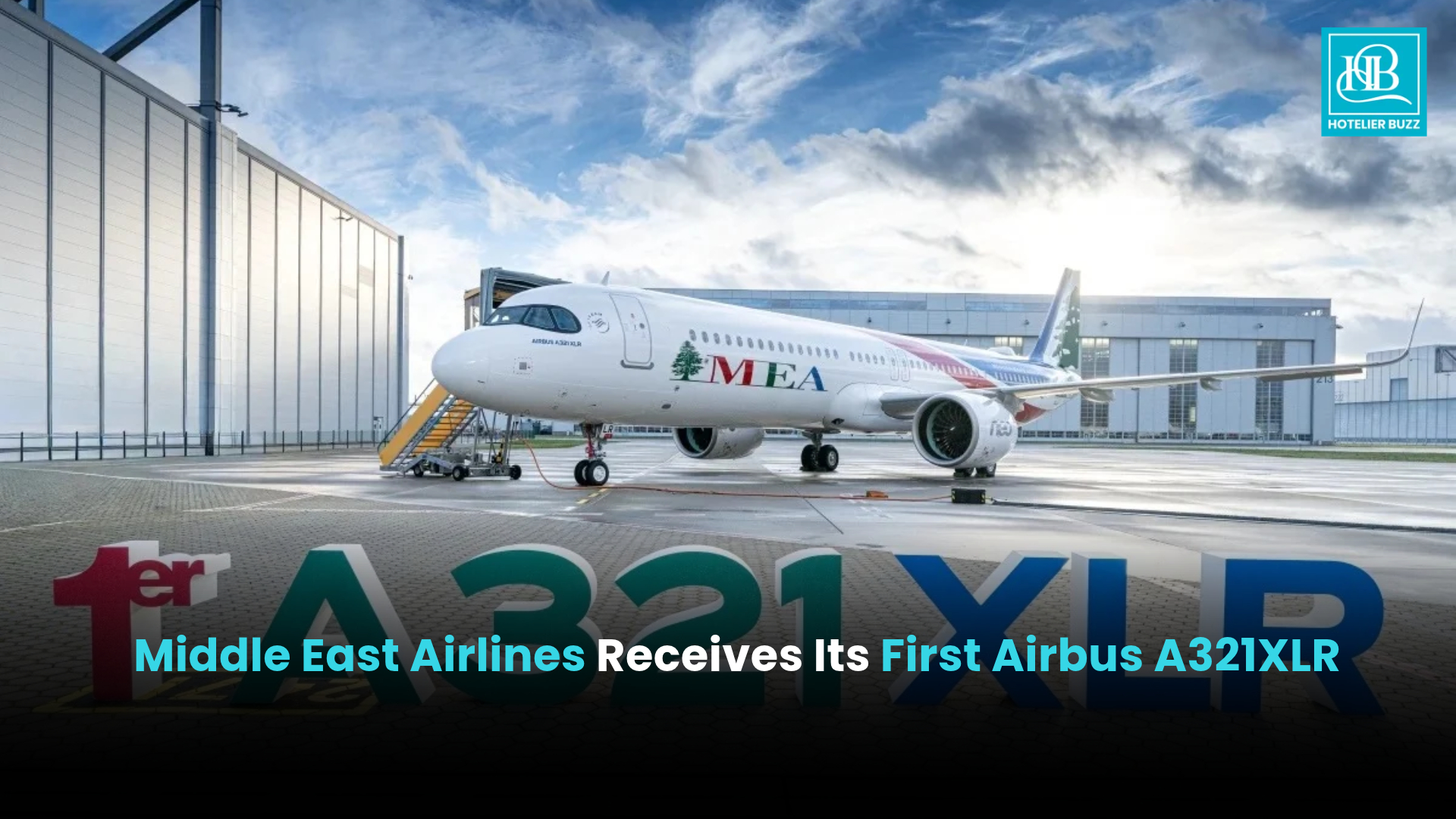
Middle East Airlines (MEA), Lebanon’s national carrier, has taken delivery of its first Airbus A321XLR, marking a new stage in the airline’s fleet modernisation programme. The aircraft is the first of five A321XLRs ordered by MEA, which became the first airline to place a firm order for the aircraft type in 2019.
The delivery strengthens MEA’s all-Airbus fleet and introduces additional operational flexibility for regional and longer-distance services. The A321XLR will allow the airline to match aircraft capacity with passenger demand while extending its ability to serve routes that may not require larger widebody aircraft.
Middle East Airlines Expands Its Airbus Fleet with A321XLR
The arrival of the A321XLR represents another development in Middle East Airlines’ long-standing relationship with Airbus.
MEA already operates aircraft from the Airbus A320 Family, including the A321neo. The addition of the A321XLR builds on this operational experience while introducing greater range capabilities.
The aircraft will support MEA’s network planning by providing an option for longer routes with comparatively lower passenger demand.
Its introduction also maintains fleet commonality within the Airbus A320 Family, allowing the airline to build on its existing operational infrastructure.
MEA Configures A321XLR with 160 Seats Across Two Classes
Middle East Airlines’ A321XLR features a two-class cabin accommodating 160 passengers.
The configuration includes 22 fully lie-flat Business Class seats and 138 Economy Class seats.
The aircraft incorporates the Airbus Airspace cabin, which introduces passenger comfort features designed for longer journeys on a single-aisle aircraft.
These include customisable ambient lighting, larger overhead storage bins and a cabin layout intended to provide an experience comparable to that of larger aircraft.
The inclusion of fully lie-flat Business Class seating also supports the aircraft’s use on longer routes, where passenger comfort becomes an important consideration.
Airbus A321XLR Provides Greater Range and Network Flexibility
The A321XLR is the latest long-range development within the Airbus A320neo Family.
The aircraft has been designed to enable airlines to operate longer routes using a single-aisle aircraft while retaining flexibility for regional services.
For Middle East Airlines, this capability creates additional options for matching aircraft deployment with route demand.
The A321XLR can serve markets where passenger volumes may not justify the capacity of a widebody aircraft, potentially allowing the airline to develop or maintain longer-distance connections with a smaller aircraft.
The aircraft will also complement MEA’s planned Airbus A330-900 fleet, providing different capacity and range options across its network.
Airbus Highlights Fuel Efficiency and Environmental Performance
According to Airbus, the A321XLR offers a 30% reduction in fuel consumption per seat compared with previous-generation aircraft.
The manufacturer also identifies lower carbon dioxide emissions and reduced noise levels among the aircraft family’s operational benefits.
These efficiency characteristics are relevant to airlines evaluating fleet replacement and route development, particularly where operating economics influence the viability of longer-distance services.
The A321XLR combines the operating characteristics of the A320neo Family with extended-range capabilities, offering an alternative to larger aircraft on selected routes.
Delivery Strengthens Long-Standing MEA and Airbus Partnership
Middle East Airlines’ relationship with Airbus spans several decades, with the carrier building its operations around aircraft from the manufacturer’s portfolio.
The A321XLR delivery follows MEA’s decision in 2019 to become the first airline to place a firm order for the aircraft type.
The broader Airbus A320 Family has accumulated nearly 20,600 orders from more than 300 customers worldwide, according to the manufacturer.
For MEA, the first A321XLR represents the beginning of deliveries under its five-aircraft order and adds a new capability to its fleet.
The aircraft’s combination of range, seating configuration and operational efficiency will support the airline’s efforts to modernise its fleet and deploy aircraft according to the requirements of individual routes.
